Blog

How Do Rodents Get into the House?

Rats, mice, and squirrels (the most common rodents in South Florida) are not only pests but can also cause significant damage living inside your house. These critters can squeeze through tiny holes and can gnaw through most home construction materials. An established rodent population cannot be controlled with repellents or deterrents.

Most Common Rodent Entry Points

There are common areas these pests use as entry holes. During our rodent inspection, we make sure to check each one of these locations and devise an exclusion plan to stop future rodent infestations.

The Roof

This is the most common rodent entry point, especially for roof rats!

If you hear scratching or squeaking coming from the roof or attic, your first task is to head on up there and check out every square inch. If your roof is high, steep, or you are uncomfortable with heights, then please hire a professional. Just make sure they specialize in pest-proofing and one-way doors – always read reviews. Also, please don’t do this when it is raining…

Below are the common access-points on a roof:

Gutter lines

Gutter lines are one of the most common rat entry points.

The fascia (the board the gutter line is attached to) degrades quickly due to frequent exposure to moisture. Homes are built with a gap between the fascia and the roof decking for moisture control. There can be small gaps/seams at the inner and outer corners.

Rats will rarely pick a point off a flat board and start chewing, instead, they like to identify small gaps and flaws and exploit them.

At Critter Control, we check every inch of the gutter line, paying special attention to corners. We lift up the shingles to see how the roof decking meets the fascia. Signs of a roof rat access point is gnaw marks, droppings in the gutter nearby, and black grease marks from the rats’ fur.

To exclude a gutter line, simply cut long strips of steel mesh (usually 3-4? wide x 4? long) and screw them into the gutter line to cover the gaps. You might have to do a small section, or you might have to do the entire line. If there is any gap at all, we would recommend addressing it all.

Soffit angles

Soffit angles are where the soffit line of one roof section meets the shingles of another. These are difficult-to-reach places during construction, and sometimes there is little holding the soffit in place.

A variety of nuisance wildlife can gain access to the attic from the soffits. Raccoons will get in the angle and use their head to try to knock the soffit out of place – we hardly see a house with roof access in the Lower Mainland without dents in their angles! If it is an active access you’ll notice it easily, if it looks tight and clean then just give it a good push to test how strong it is. Not every soffit angle needs to be excluded, but if it is flimsy then you should address it.

These can be tricky to pest-proof. The key is to cut steel mesh the same width as the soffit line and about 4? long. Tack it onto the line, run tight into the angle, and then screw it down onto the shingles. Pick up some roof sealant to cover your screws to be safe, but usually, you’ll be under the cover of the soffit line above so leaks aren’t much of a concern.

Take a good look at your finished product, if there’s more than a 1/2? gap then you either need a bigger piece or just install some filler pieces. This doesn’t have to be pretty – you’ll hardly see it from the ground – but if you can pull it out of place then it likely won’t last. Don’t underestimate these things!

Chimneys

This is usually where people think the rats are accessing the roof, but it’s not as common as you would think. If there is no grating on the chimney hole then you have a few options. We usually cut a piece of mesh just slightly bigger than the opening and press it inside; the mesh will bite and hold with enough strength to be effective.

Plastic roof vents

Often overlooked, plastic vents are an easy access point for a variety of larger pests. Although they look sturdy from the outside, anything that squeezes underneath the overhang has only a plastic bug mesh to chew through. The best thing to do is to grab a flat nail-puller and gently pull the vents completely off the roof to expose the hole. If you don’t have an attic hatch, this is a great way to get a look inside!

Walls

Take an initial walk around and check your walls from the ground up – there likely isn’t a random hole in the middle of the wall, but look anyway. Take note of any plastic vents or metal vents that might have screens missing or loose.

Foundation

Holes in the foundation most often occur where the wood structure of the house meets the foundation. There might be an obvious hole, or it could be hidden underneath the siding.

If you can get your whole hand underneath your siding then you need to determine whether or not the siding is hiding weak infrastructure or not. The easiest way is to put on a glove and start feeling around. If you can’t find the top of the void then we would suggest excluding it. Fortunately, this is pretty simple. Cut some 3? strips of mesh and give them a bend down the middle (the long way), then push it up into the void and let it expand, that’s it!

Doors

Seems obvious, but it is often overlooked. Give all your doors and frames a good look – if there is a noticeable gap you can either cover it with mesh or flashing, or there are rodent-proof door sweeps that can be purchased and easily installed. These could be hard to get depending on your area; the company is based in the US and doesn’t have a huge presence yet.

Steps

Rats love nesting under steps, and if there is a void with an exposed flaw, you can bet they’ll try to exploit it.

You can usually tell if this is the problem by simply inspecting the perimeter of the step. Look for trails, digs, and droppings. If you think rats might be under the step and there is an activity that corresponds to the interior, then you should assume there is an access point behind it.

Large wooden steps often allow access underneath with a little work – this is the best-case scenario. Get under there and inspect the exterior wall, you’ll see an obvious access point if it is there.

If there is no access – such as a concrete step – then you’ll have to do some trenching. Dig a 1×1? hole around the perimeter of the step, and affix mesh from the step (just above the ground line) down into the trench, and then out, effectively creating an “L” shape. This can be tough if there are roots, but if it is necessary then you’ll just have to get through them. If you’re doing this with a concrete step, ideally you can get a hold of a concrete drill to affix the mesh. These can be rented for cheap, or we bet one of your neighbors has one. Punch a hole every foot and use concrete screws with washers to keep the screen tight to the step. This looks tidy and is as permanent as it gets.

Decks

Same deal as steps, but probably a little more common. If you think your deck is hiding an access point, you have a couple of options. If it’s high, crawl in there! If it’s low to the ground, you can pull up the boards close to the house and work that way – this often works!

How Critter Control Gets Rid of Rodents

Critter Control specializes in rodent removal and control. Rodent removal begins with a thorough inspection to determine how severe the problem is. The more established rodents are, the more involved the removal process will be. After inspecting, our wildlife specialist will build a custom solution to trap, remove, and seal all entry points.


How to Catch a Mouse

Mice are active year-round and reproduce at a prodigious rate. Mouse control needs to be implemented at the first sign of a mouse. Effective mouse control includes rodent-proofing exclusions, habitat modification, sanitation, and population reduction with rodenticides and traps.

Mice are clever and become suspicious when something new appears in their travel paths. They are easily to loud or novel noises. Because mice quickly grow accustomed to these sounds if they hear them repeatedly, ultrasonic repellents have very limited usefulness. Other repellents or essential oils like peppermint that rely on taste or odors have limited usefulness if any.

How to Catch a Mouse in Your House

Rodenticides usually require a commercial pest control license. Toxicants typically are not appropriate to use in a house. They introduce dangers to people and pets. Mice can die inside your home resulting in problems associated with dead mice in your house.

Mouse Trapping Tips from Critter Control

  • Scent- Since mice have such a great sense of smell, your hands must be clean and free of any pet odor, so the mice don’t smell other animals on the traps you set.
  • Placement- Look for evidence as to where your mice could be nesting and place traps around that area. If there’s a place in your home with lots of droppings, bite marks, or chewed wiring, chances are that’s where the mice are living.
  • Bait- Bait that is high in protein like peanut butter or cheese works best with mice. Remember, a little bit goes a long way.
  • Number of Traps- Generally, placing more traps than you think there are mice is a good rule to follow. It is better to have more traps than fewer, and if you overestimate, more traps mean a higher chance of catching a mouse.

If you place a trap in the middle of their path, they will avoid it until they feel it is harmless. While you wait for the trap to snap, the mice multiply.

Mice rarely venture more than fifty feet from their nest. Space traps are no more than 6 feet apart where mice activity is present. Baseboards are one of the most effective places to put a mouse trap. A common mistake is to not use enough traps.

Different Mouse Traps

Common methods of control include snap traps, glue traps, and poison baits. However, all of these traps must be employed correctly to be effective. For example, snap traps need to be placed in areas of high mouse traffic, but mice are traditionally wary of new objects in their environment. Glue boards work similarly to fly paper, and need to be replaced constantly. Poison baits are perhaps the most practical store-bought method, but they can be accidentally ingested by pets and children.

A Sherman-style box trap for mouse control is a humane and effective method to catch and remove mice from an area. It is designed in a way that entices a mouse to enter the trap but prevents it from escaping once inside. Here’s a description of a typical Sherman-style box trap:

The trap consists of a rectangular box made of durable and sturdy materials such as metal or plastic. It has a solid base, four vertical walls, and a removable lid or door.

The trap is typically small enough to fit in tight spaces where mice are commonly found, such as along walls or in cupboards. The dimensions may vary, but it is usually around 10-12 inches in length, 6-8 inches in width, and 5-7 inches in height.

One of the walls has a small entryway designed to specifically attract mice. It can be a small hole or tunnel-like opening with a size that allows the mouse to enter comfortably. This entryway ensures that only mice, and not larger animals, can access the trap.

Include several cotton balls to provide a visual attractant. Do not place bait directly in the trap. Smear peanut butter or glue seeds on wax paper then fold it.

Multiple capture traps or automatic traps lure the mouse inside and prevent their exit. The Ketch-All has a rotating, spring-powered mechanism to trap mice. The Tin Cat has a 1-way door. Check these automatic traps regularly so the trapped mice do not die.

What is the best bait for mouse traps?

Peanut butter, marshmallows, hot dogs, and bacon are some of the best baits. Baits that are stale do lose effectiveness.

Where is the best place to place mouse traps?

Set traps close to walls along the baseboard, behind objects, in dark places like closets, or in any locations where mouse activity is seen.

Benefits of Professional Mouse Control

Homeowners often try to exterminate a mouse problem using standard, over-the-counter traps. Whether it’s a snap trap, bait house, or glue trap, they won’t work if you don’t use the correct bait. You must also know where to place the bait traps to eliminate the entire population.

Mice are clever and become suspicious when something new appears in their travel paths. If you place a trap in the middle of their path, they will avoid it until they feel it is harmless. While you wait for the trap to snap, the mice multiply.

Professional mouse control offers many advantages, like knowing which baits attract mice most. They develop control strategies that include scent repellents, exclusions, and properly placed traps. Professionals apply sanitization to areas where there is feces and urine.

Hiring a professional mouse control technician at Critter Control offers you and your family advantages that far outweigh trying to get rid of a mouse infestation yourself. Advantages include expertise, experience, assessment and custom solutions, integrated pest management strategies, safety, compliance, and long-term solutions.

Rats vs Mouse: The Most Common Household Pests in Fort Lauderdale

Two of the most common pests in Fort Lauderdale are the house mouse and roof rat.

If you’re hearing strange scratching or scurrying noises in your walls, or perhaps have noticed some small droppings in the kitchen, laundry room, or basement, chances are your house is being enjoyed by rodents.

But to determine how to resolve the issue, first, you must know what you’re dealing with—mice or rats.

Many people seem to think these rodents only differ from one another in terms of size, but there are many more subtle differentiators, including behavioral ones.

Signs of a Rodent Infestation

Droppings

Since rats are larger, their droppings will be larger as well. Rat droppings are generally 3/8 inches long, with a diameter of 1/8 of an inch. Mice droppings are about half this size. Both are oblong pellets, but rat droppings have rounded tips, and mice have pointed tips. Rat droppings are most commonly found where rats are active: in basements, crawl spaces, and behind large appliances.

Runways.

Mice and rats are creatures of habit and will follow the same route between their nest site and food and water uses. After repeated use, these paths develop dark, greasy rub marks that are accumulated from the oils and dirt on the rodent’s fur. Runways usually follow along manmade edges like baseboards.

Gnaw marks.

A rodent’s teeth grow continuously, so they must gnaw on things to keep this growth in check. As you might expect, this leaves rather damning evidence. Look for gnaw marks on things like garbage cans, fences, food containers, and under porches.

Rodent Sounds.

Mice and rats all make similar sounds if they’ve made it into your house; these are usually described as rustling or scurrying noises. The bigger the rodent, the louder the sound will be.

Rat vs Mice Appearance

The easiest way to tell mice and rats apart is their appearance. At first glance, mice might appear to be scaled-down versions of rats. Rats and mice are different sizes, colors, and body shapes. If you have an infestation, it is rare to see a rat or a mouse. You are more likely to see the evidence left behind from the rodents. The most obvious one is rodent feces.

Rats vs Mice Size

House mice are diminutive creatures, reaching an adult body length of a mere 3-4 inches, and a tail length of 1-2 inches. Their weight rarely exceeds 45 grams.

Rats can grow up to ten inches long, not including the tail. The tail usually is as long as the body.  Adult males typically weigh around 1.25 pounds.

Rats vs Mice Color

House mice are light brown or grey, with solid coats, while deer mice have brown or tan fur with white bellies.

The most common rat, the Norway rat, has a brown body with a white underbelly, while roof rats appear dark grey-brown, with undersides that range from white to grey to black.

Mice vs Rats Behavior

The differences between mice and rats don’t stop at the physical—they also display notable behavioral differences.

Mice are curious creatures and will often investigate things (such as baited traps) with little to no hesitation.

Rats are much more cautious, preferring to avoid unfamiliar situations; for this reason, it is recommended to set rat traps out a few days before baiting them, to give the rats time to familiarize themselves with them.

Rats are more social creatures than mice by far—so social that they are often used in behavioral studies because their sociability is seen as somewhat analogous to humans.

Mice Lifecycle

The average lifespan of a wild mouse is typically one to two years, while pet mice can expect to live a year longer. Getting into the realm of pure anomaly, a couple of pampered laboratory mice have reached the age of four and a half.

Male house mice court females by emitting special ultrasonic calls in the 30-110 kHz range. These calls are made mostly during courtship when the male mouse sniffs and follows the female around; however, they can continue when mating has begun. Males have been shown to emit these calls when exposed to female pheromones. The calls also appear to be quite complex; they seem to differ between individuals and have therefore garnered comparisons to bird songs. House mice can produce up to 14 litters of 1-12 offspring per year.

Rat Lifecycle

Like mice, rats can expect to live around two years in the wild, but there have been some cases of pet rats reaching seven years of age.

Generally, male rats reach sexual maturity at 10-12 weeks of age, although females may have their first estrus as early as 8-9 weeks of age. Rats are polyestrous and breed throughout the year, usually at night. Females can produce up to five litters a year, and the gestation period for Norway rats is only 21 days. Litters can number up to 14.

This means that under ideal conditions, the population of females could increase by a factor of three and a half in eight weeks, corresponding to a population growing by a factor of 10 in just 15 weeks. Therefore, a rat population can grow from 2 to 15,000 in just one year!

Where Do Mice and Rats Hide in the House?

Mice

Mice will go into any type of home or building that has access points for them, including cracks and crevices, vents, and holes. They prefer warm, dark, and sheltered areas, such as wall cavities, attics, basements, and storage sheds.

Mice generally prefer to stay on ground level, and commonly shack up in or around major appliances such as stoves, dishwashers, or even vehicles that have sat idle for a while. They also commonly infest wall voids, as they are dark, warm, and free from both predators and humans.

Rats

Roof rats, as their name suggests, prefer elevated areas like attics, voids in the roofline, or ceilings.

Professional Rodent Control in Fort Lauderdale

While mice and rats might be different in many respects, they are both known for their tendency to transmit various diseases, multiply at an extraordinary rate, and be very challenging to deal with once an infestation has set in.

When Should I Call a Professional Exterminator?

Some of us have a proclivity for DIY projects. You might have a passion for fixing up the old lawnmower or fashioning a coffee table from wood pallets. Being able to do it yourself is great – it gives you a feeling of satisfaction that you are capable and skilled, and it likely also saves you money.

However, not every task is suitable for DIYers. For instance, you may be tempted to try to control a rodent infestation on your own with traps from the local hardware store. But, you’d be much better off calling a professional animal control service to deal with those rats – it’s just too risky to do it yourself.

Rodent Problems

When there are rodents living in your house, there’s no time to waste. If left alone, they can do significant damage to your home. Rodents have a need to gnaw on objects to file down their ever-growing incisors, and they aren’t too picky. Furniture, walls, doors, baseboards, and many other things make great rat chewing objects.

Their urine and feces also create complications for homeowners. Not only will their excrement undoubtedly give off unpleasant odors, it destroys whatever it sits on. Many walls and ceilings have been completely ruined by rodent infestations due to their waste alone.

Experts Required

Rodent infestations can happen right under your nose, so don’t be ashamed to call a professional. After all, it’s hard to notice one rat in the garage or attic in the course of daily life. It’s likely not until the rodent problem gets out of hand that you will begin to notice the signs. Once you observe rat droppings scattered around areas, bite marks on various surfaces, or even the odd rat scurrying in or around your house, it’s time to call Critter Control® serving Ft. Lauderdale.

Snakes in Your Yard Mean Rats in Your Home

Which would you rather have on your property, snakes or rats? The answer is most likely neither, though one does a lot more harm than the other.

If you see a snake in your yard it is not a cause for alarm. A snake will try to flee unless cornered. Make sure you are not blocking the snake’s escape route. Of the forty-six snake species native to Florida, thirty-four are present in South Florida. Only four of those snakes are venomous (the pygmy rattlesnake, the Eastern diamondback rattlesnake, the water mocassin, and the coral snake).

What Are Other Signs of Snakes in the Yard?

Discovering holes in your yard can be unnerving, as it is often difficult to tell what created it, and if it is still occupied or not. Snakes, for example, tend to move into holes previously dug by rodents or other animals. Being able to identify these holes and determine if they are occupied by snakes is a small but important way to ensure the safety of your family and pets. In this guide, we will delve into the characteristics of snake holes and provide you with actionable advice to handle them effectively.

To identify recent snake activity around a hole, look for fresh snake tracks near the entrance. These tracks often appear as wavy lines in the soil. Another sign is the presence of shed snake skins nearby, as snakes shed their skin periodically, often close to their burrows. Additionally, disturbed or displaced soil around the entrance of the hole can indicate recent snake activity.

Snake Holes on Your House

Snakes are skilled at finding their way into homes, often through small openings that may go unnoticed. Understanding how snakes get inside your house and knowing the typical places for snake entry holes can help you take preventative measures to keep these slithering creatures out.

So, how do snakes manage to infiltrate your home? There are several ways:

  • Cracks and gaps: Snakes can squeeze through tiny cracks and gaps in the foundation, walls, or windows of your house. Even the smallest openings can be an invitation for these reptiles.
  • Doors and windows: If doors and windows are not properly sealed or have gaps in their frames, snakes can easily slither their way inside.
  • Vents and pipes: Snakes are excellent climbers and can make their way into your home through vents or pipes that are not adequately covered or protected.

Now that you have an idea of how snakes gain access to your house, let’s explore the typical places where you might find snake entry holes:

  • Foundation: Snakes can enter through gaps in the foundation, especially near utility pipes or areas where the foundation has shifted or cracked.
  • Exterior walls: Look for cracks or holes in the exterior walls of your house, particularly around utility openings or damaged siding.
  • Attic: Snakes can access your attic through gaps in the eaves, vents, or damaged roof shingles.
  • Crawl spaces: Inspect crawl spaces for any openings or gaps that snakes could use as entry points.

Rats in your yard or in your house are a bigger concern. Rats are notoriously invasive, and once they make it inside your home, they will cause all sorts of problems.

Why is a Snake a Sign of Rodent Infestation?

If you see a snake or two consistently hanging around your house, it probably signifies that you have a rat problem.  Snakes are drawn toward rodent populations because they present a wonderful feeding opportunity. Rat infestations can contain dozens and dozens of critters, which means several full bellies for a snake.

In this case, the presence of the snakes is a positive thing, because they are helping you eliminate the troublesome pests.

How to Get Rid of Rats

You can’t leave all the work to the snakes – you must also act to eliminate the rodent infestation in your home. After all, you aren’t exactly going to let a couple of snakes inside your house to help you out, since they don’t belong there either. But, once you get rid of your rodent problem, you almost certainly won’t see the snakes in your yard anymore. Get rid of the rats, and you will have solved your critter problem.

That is often easier said than done. Rat infestations are incredibly difficult to fight against because rats are such fast breeders. Even if you manage to capture a few of them in traps, their numbers will still continue to grow. And if you don’t deal with the issue as soon as you discover the rodents in your house, they can do significant damage through their chewing and excrement.

Seeing snakes in your yard and rats in your house? Don’t waste precious time trying to take care of the problem yourself. The longer the infestation lasts, the more damage the rats will do, and the more money you will have to pay for repairs. Instead, call Critter Control® immediately. Our trained technicians will apply their vast knowledge and experience with rodent infestations to your situation. We lead the nation in quality animal control service, so you can be sure that you are in good hands with us. For a free consultation, call us today at 954-467-6067.

How Bat Guano Can Ruin an Attic

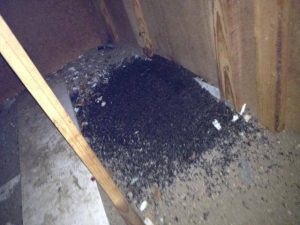
Bats are extremely helpful creatures in our buggy Florida environment. Without them, the populations of mosquitos and flies would balloon out of control. But, bats are not quite as helpful inside your house. They can cause a myriad of issues if they are allowed to roost in your attic for an extended amount of time. The worst thing about having bats in your attic is not the disruptions they cause; they are quiet and shy creatures which don’t make a lot of noise. Far worse is the guano, their excrement, which collects under their roosting sites.

What You Should Know about Guano

Guano can resemble rodent droppings, but it has a couple important differences. First, scattered pieces might look shiny or speckled, since bats consume a lot of insect wings. Guano is also more dusty than rat droppings, and will completely crumble when disturbed. Often, you will find it primarily in concentrated areas directly under roosting sites, so you might observe characteristic piles of the waste rather than dispersed pieces.

Guano Damage

There are several factors which can determine the extent of guano damage.

  • Location of the piles: If the guano has built up in a fortified section of an attic, you will be safer than if it piles up on top of drywall. If you’re not so fortunate, the weight of the guano can bear down on the wall, causing structural damage.
  • Proximity to air ducts: You don’t want to breathe in spores of any kind of waste, so if the pile of guano is near any vents or ducts, you will want to consult a professional.
  • Amount of time: If the bats have been in your house for a long period of time, you will likely have significant piles of guano. Larger piles mean more damage and a harder cleanup.
  • Attic insulation: One of the things most commonly ruined by guano is attic insulation, since the feces can become mixed into both fiberglass and loose insulation. In this case, you will have to throw out your old insulation and replace it.

Professional Bat Guano Cleanup

If you find large piles of Guano in your attic, call the professionals at Critter Control® serving Ft. Lauderdale immediately. You need to take care of the problem as soon as possible to minimize the damage and repair costs. Our experts are fully certified to perform bat exclusions, should the animals still be in your attic, and also have the proper equipment to clean up guano and sanitize the space. If you’d like a free consultation or have any questions, please contact us today at 954-467-6067.

Florida Bat Protections

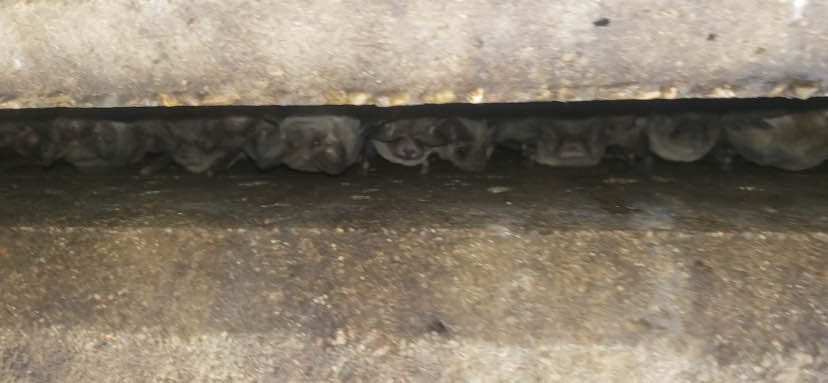
There is a wide gulf between the public perception of bats and their importance to the environment. Though they are often viewed as creepy and dangerous due to their association with vampires and horror movies, they are one of the most necessary creatures for maintaining Florida’s ecosystem. The populations of insects would skyrocket without bats – they eat thousands of mosquitoes and other bugs every night.
For this reason, bats are one of the most heavily protected species in Florida and in other states around the country. The Gray bat and the Indiana bat are two federally protected species found in Florida. In addition to these, the Florida bonneted bat is also a protected endangered species. There are penalties for handling, injuring, moving, selling, and killing these types of bats which can run up to thousands of dollars.

What to Do When a Bat Roosts in Your House

Tricky situations arise when bats decide to make their roost in your attic. You certainly didn’t want them to come in, and you don’t want to deal with the legal consequences of trying to get them out. But, they can’t stay – so what do you do?

It is unwise to attempt a bat removal on your own, because you may accidently hurt or kill the bats. In addition, there are certain times of year during which it is unlawful to perform a bat removal. From April 15 to August 15 is Florida’s bat maternity season, which means that it is illegal to try to get rid of the bats during the summer months. This is because bat mother typically only have 1 pup, and if you remove them before the pup can fly, it will likely die since it totally relies on the mother for food. To try to help the bat population get back to healthy numbers, the state has restricted removals during this time.

Whenever you see bats roosting in your attic, it is best to call Critter Control® serving Ft. Lauderdale to perform a bat exclusion. We are fully licensed by the state to handle bats, and our humane methods are sure to keep the endangered animals protected the whole time. Call us today for a free initial consultation at 954-467-6067.

Signs You Have a Dead Animal in Your House

Nobody likes the thought of wild animals in their home. The idea that there are critters lurking somewhere in the house gives people chills. They leave frustrating messes behind and are difficult to track down. But sometimes they can pose even more irritating problems when they die in your house.

The following are obvious signs that a dead animal is decomposing somewhere inside your home. If you’ve noticed any of these, call the professionals at Critter Control as soon as possible.

  • Smell – This is an undeniable, unavoidable consequence of a dead animal in your house. The odor will be so pungent and putrid that it’ll be impossible not to detect after a certain amount of time. As the body first begins to decompose, the smell may be localized and not as strong, but after a couple of days it will become overpowering.
  • Wet Spots – As disgusting as it sounds, the decomposing body will begin to liquify. Over time, this wetness will begin to seep into the walls or ceiling, depending on where the body is located. This can obviously cause damage to the structure of the home.
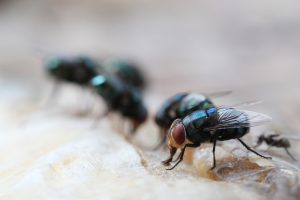
  • Flies – You’ve probably seen how flies flock to rotting things out in nature, whether its an old orange on the ground or roadkill. They get easy nutrients from stuff that is decomposing, and actually like to lay their eggs in rotting animals as well, since it provides plenty of food for larvae when they hatch. If you notice a sharp uptick in flies inside, there might be a dead animal somewhere.

Call the Professionals

It’s not like you need to be Sherlock Holmes to detect these signs – they’ll be so obvious that it’d be incredible not to notice them. Critter Control serving Ft. Lauderdale doesn’t only remove living pests; we can help your home get back to its normal, odor-free condition by locating and removing any decaying carcasses and cleaning the mess. For a free initial consultation, call us today at 954-467-6067.

The Importance of Early Rat Removal

Though they are small, rats are not to be trifled with. They can create a myriad of problems for homeowners if they manage to get inside houses. Contaminating food, chewing on wires and walls, and soiling surfaces with excrement are just a few of the bothersome things rats can do. The worst thing you can do in this situation is nothing – the longer the rats live in your house, the worse your situation will get. Call Critter Control as soon as you believe you have unwanted rodent houseguests to minimize the damage they can do.

The Snowball Effect

Rat infestations have a sort of snowball effect at play due to the rodent’s rapid breeding abilities. The brown rat, one of the most common species, can breed up to 5 times a year with litters of up to 14 young. Though by these numbers an individual rat can have dozens of babies, what really causes the population numbers to explode is the fact that the brown rat reaches sexual maturity at 5 weeks old.

This is why it is so critical to remove the rodents as early as possible. Left unchecked for just a couple months, the number of rats in your home will have multiplied. However, it is far harder to detect just a couple rats in your home than dozens. Don’t ignore your intuition if you think there could be animals in your home – call the experts at Critter Control to come assess the situation for you for free.

Rat Infestation Experts

If you try to deal with an infestation by yourself, you run the risk of giving the rats more time to breed. In addition, your traps may capture many adult rats and you could be lured to a false sense of security. If they have been living in your walls and breeding, then there could be a new batch of young too small to move around and be taken by your traps. Without any adults providing them food, they will die in the walls, emitting a foul odor which could take weeks to fully go away.

Your best chance of completely solving your rat problem is to hire the professionals at Critter Control. Rat infestations require experience, knowledge, skill, and patience. Countless rat removal jobs have equipped us to deal with infestations of any magnitude successfully. We are experts at inspecting houses, removing critters, sanitizing and repairing damaged areas, and preventing future issues. Take advantage of our free initial consultation offer by calling 954-467-6067.

Common DIY Animal Control Mistakes

With a wealth of information readily available to anyone with internet access, it is no surprise that the DIY craze has exploded recently. From learning how to make the dish at your favorite restaurant to fixing a car, the internet offers “how to” videos for almost everything. But, just because there’s a video teaching you how to do something doesn’t mean the information is accurate and helpful. One thing you can’t afford to get wrong is nuisance animal control – a poorly executed job can end up costing you money and putting you or the animal in harm’s way.

Here are a few of the most common mistakes that DIYers make when trying to get nuisance pests out of their homes.

Sealing Off the Home Before the Animal is Gone

You may have seen raccoon scurrying around in your attic, and, furious that the animal got in your house, you go on a hunt to discover how it got in. In your frustration, you close off all the gaps you can find on the exterior of your home.

But, this mistake can prove costly. Without the ability to get out of your house, the animal will likely starve to death and die in your attic. When this happens, the body will decay and give off horrible smells, in addition to becoming a breeding ground for bacteria. You never want to seal up your home until you are positive all the nuisance animals are gone.

Using Poison

While it may seem like the best option for solving your pest problem, poison is a terrible idea. Though it seems like a relatively hands-off, easy-fix solution, poison can quickly backfire on you. It is also illegal to use on many nuisance wildlife in Florida.

A pet or child might find the poison and ingest it, leaving you with a dangerous situation. Or, the animal might take the poisoned bait, only for it to scurry away back to its den in the walls and die there hours later. Then, you will be subject to a horrible stench for weeks without being able to find or reach the body of the animal. DIY poison placement is never a responsible or effective solution.

Forgetting to Deal with the Main Issue

The vast majority of DIYers and even some pest control services don’t completely grasp the whole issue. They will catch and remove nuisance animals from your home, and think the job is complete.

But, this is like dumping the water out of a sinking boat without plugging the hole in the bottom. The conditions which first drew the pest to your house remain the same. An exemplary professional animal removal service will not only help you take care of the pests in your house right now, but will also help you guard against future invaders as well. Removing the animal is only part of the solution – you also need to get rid of any attractants and re-fortify the exterior of the house to prevent them from easily regaining access.

The Best Animal Control Service in the Business

The difference between nuisance animal control experts and DIYers is vast. At Critter Control serving Ft. Lauderdale, we use our years of experience to see what others don’t. We not only know the most effective and humane methods to remove pests, but we can also identify better than anyone else how the critters got into your house. But we don’t stop there – we can fix these structural weaknesses along with any damage and messes the animals left behind. See the Critter Control difference for yourself and call 954-467-6067 for a free consultation.